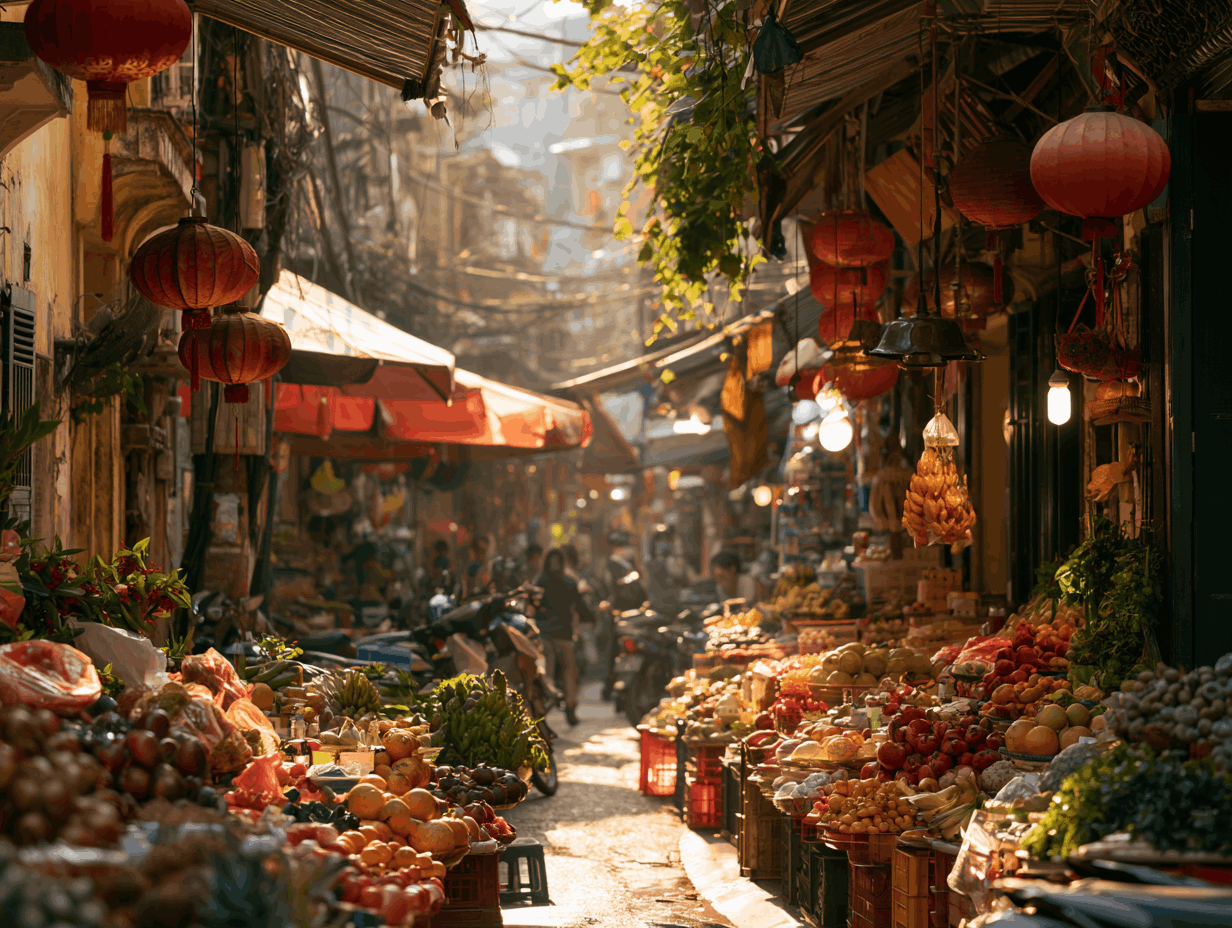
Unravel the daily texture of Vietnam and the larger landmarks fall into the background. Street markets, small cafés and the repeated habits of morning and evening show more of how life actually moves than any single monument. This piece stays with those ordinary scenes, the neighbourhood rhythms, the coffee that anchors many pauses, and the small festivals that still belong to the people who live nearby.
Places
Markets form the clearest starting point. In the early hours the streets fill with stalls that sell everything from fresh herbs and live fish to household goods carried in on motorbikes. The larger ones in city centres draw steady crowds, yet the smaller neighbourhood markets often feel more local, with regulars who know the sellers by name and the best time to arrive for certain produce. Cafés sit close by, sometimes little more than a few low stools on the pavement. The coffee itself arrives strong and slow, often over ice, and the time spent with it becomes part of the ritual rather than a quick stop. Morning routines follow a familiar pattern in many districts. People move out early for food, exercise or simply to claim a spot before the heat builds, and the same corners fill again in the late afternoon when the air softens. Neighbourhood festivals appear without much fanfare. They may mark a local temple date or a seasonal turn, with food shared on the street and music that stays close to the block rather than filling a large stage.
Landscapes
The setting for these rituals stays tightly woven into the urban fabric. Streets that serve as markets by day become ordinary thoroughfares once the stalls pack away, and the same stretch can hold both dense activity and sudden quiet. In older quarters the buildings press close, with balconies and ground-floor openings that keep private life and public movement only a few steps apart. Further out the pattern loosens. Markets may gather under simple roofs or along the edges of quieter roads, and the cafés spread into open spaces where the light and air feel different. The climate shapes the timing more than any clock. Heat pushes activity toward the ends of the day, and rain can empty a street in minutes or simply drive people under the nearest cover without breaking the conversation. These small landscapes of pavement, stool and stall hold the repeated gestures that make the day recognisable to the people who move through them.
Cultures
Everyday habits carry more weight than formal rules. Greeting the seller or the café owner with a few words softens the exchange, and the act of sitting for coffee often invites a longer pause than expected. Food from the market tends to move straight into meals that stay simple and fresh, with herbs and broths that change slightly from one district to the next. Festivals in these neighbourhoods keep a practical character. Offerings, shared dishes and short processions mark the occasion, yet the streets return to normal soon after. What frequently surprises visitors is how openly the ordinary unfolds. People eat, talk and rest in full view of the street, and the same space shifts from commerce to rest without clear boundaries. The language moves quickly, yet a willingness to point, smile and accept the pace usually opens more of the rhythm than any detailed preparation.
These markets, cafés and rituals do not present themselves as attractions. They simply continue as the background of daily life. The places give the setting, the small landscapes of street and stool hold the movement, and the cultural habits keep the hours familiar. Spending time among them usually leaves a clearer sense of the country that exists between the better known stops.
Leave your email if you would like occasional notes about new stories and quiet destinations.
No frequent messages, just the ones worth reading.
© 2026 Unravel PLC LLC. All rights reserved.
