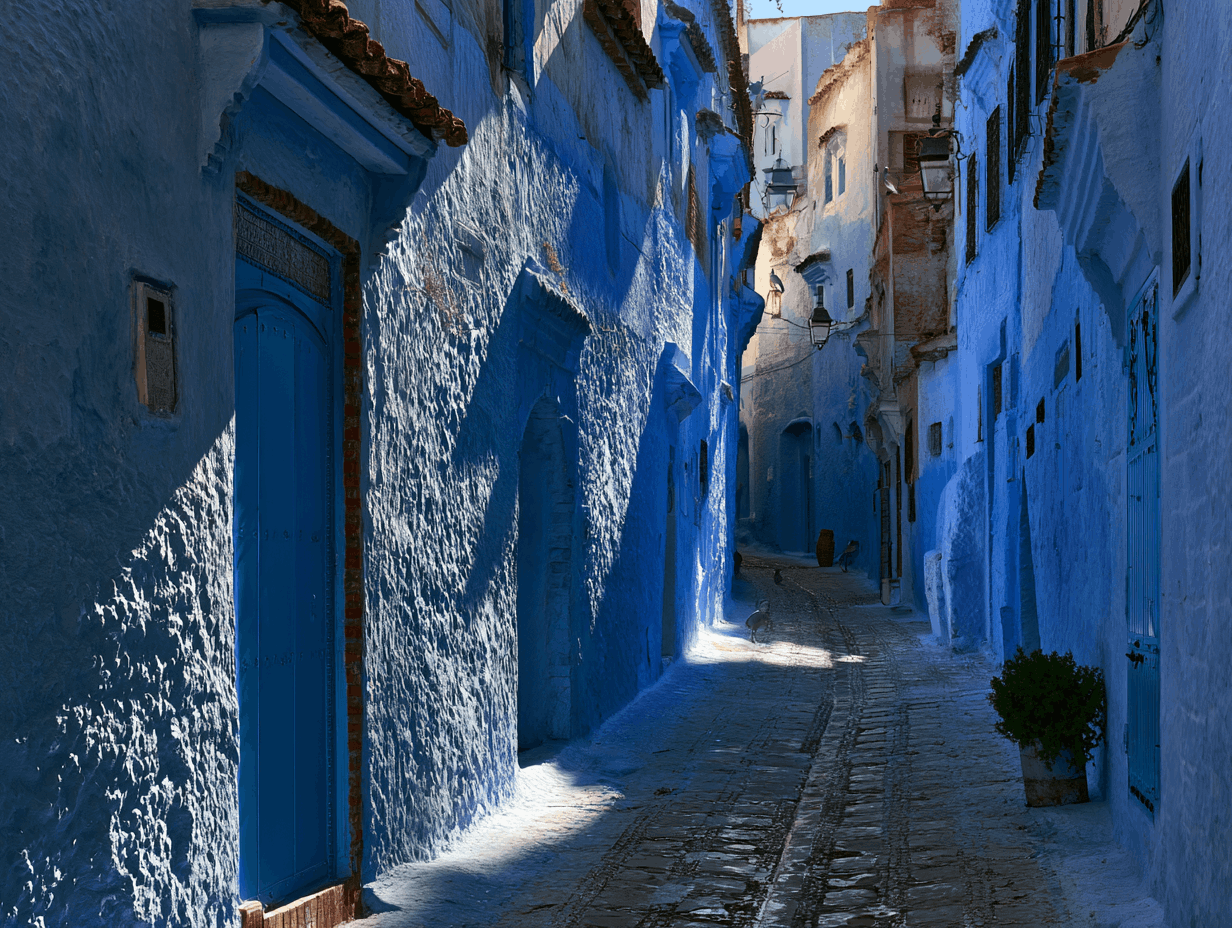
Morocco shifts quickly once you leave the main roads. Medinas pack centuries into narrow lanes, mountain villages cling to slopes, and the desert opens without much warning. This piece looks at the cities and their older cores, the highland settlements, the dry landscapes and coastal edges, the markets and food, and the small rules of etiquette that still shape how people move through the day.
Places
The medinas form the heart of most larger towns. In Marrakech the lanes twist around squares and riads, with stalls that spill into the paths and the call to prayer cutting through the noise at regular intervals. Fez feels denser and older, its medina still working as a living centre rather than a preserved set. Tangier sits on the edge of the strait and carries a different mix of influences in its streets and cafes. Further inland smaller towns keep quieter medinas where the pace slows and the shops close earlier. Mountain villages in the High Atlas or the Rif sit higher and feel more separate. Stone houses stack against the hillsides, and the roads that reach them often narrow to single tracks. Coastal spots add another layer. Essaouira faces the Atlantic with its ramparts and harbour, while the stretches further south toward Agadir open into longer beaches and lower buildings. The routes between these places can feel long. Buses and shared taxis connect the main points, yet the real shifts happen when the road climbs into the mountains or drops toward the sand.
Landscapes
Desert landscapes dominate the south and east. The dunes near Merzouga rise in long ridges that change colour with the light, and the quieter areas further out stay empty enough that the wind becomes the main sound. Rocky plateaus and dry riverbeds fill the spaces between the sand seas. In the mountains the scenery tightens. Cedar forests cover parts of the Middle Atlas, while higher passes stay open and windswept for much of the year. Coastal spots bring a softer contrast. Cliffs drop into the Atlantic in places, and the light stays clearer when the haze lifts. Oases appear as green interruptions in the dry country, with date palms and small plots of land that still rely on careful water channels. The scale can surprise. One stretch of road can move from busy town edges to empty horizons in less than an hour, and the temperature often swings just as fast once the sun drops.
Cultures
Markets set much of the daily rhythm. They open early, fill with noise and colour, and close when the heat or the light decides. Food follows the same pattern. Tagines cook slowly in the markets and in home kitchens, bread comes fresh from communal ovens, and mint tea arrives at almost any pause in the day. Cuisine changes with the region. Coastal towns lean on fish, while inland dishes use more preserved meats and spices that travel well. Cultural etiquette stays present even in busy places. Greetings matter, and a simple exchange before any request softens the interaction. Dress tends to be modest in most settings, especially away from the main tourist edges. Shoes come off in certain homes and mosques, and the right hand is preferred for eating and greeting. What often catches visitors off guard is how quickly the atmosphere can shift from open and noisy to quiet and formal once you step into a more private space. The language mix of Arabic, Berber dialects and French still shapes many conversations, yet a few basic phrases in the local forms usually draw warmer responses.
Morocco does not settle into one clear picture. The cities and medinas give density and history, the deserts and mountains open space and contrast, and the traditions of markets, food and etiquette fill the gaps between them. Moving through the three usually leaves a stronger sense of how the place holds its different sides together.
Leave your email if you would like occasional notes about new stories and quiet destinations.
No frequent messages, just the ones worth reading.
© 2026 Unravel PLC LLC. All rights reserved.
