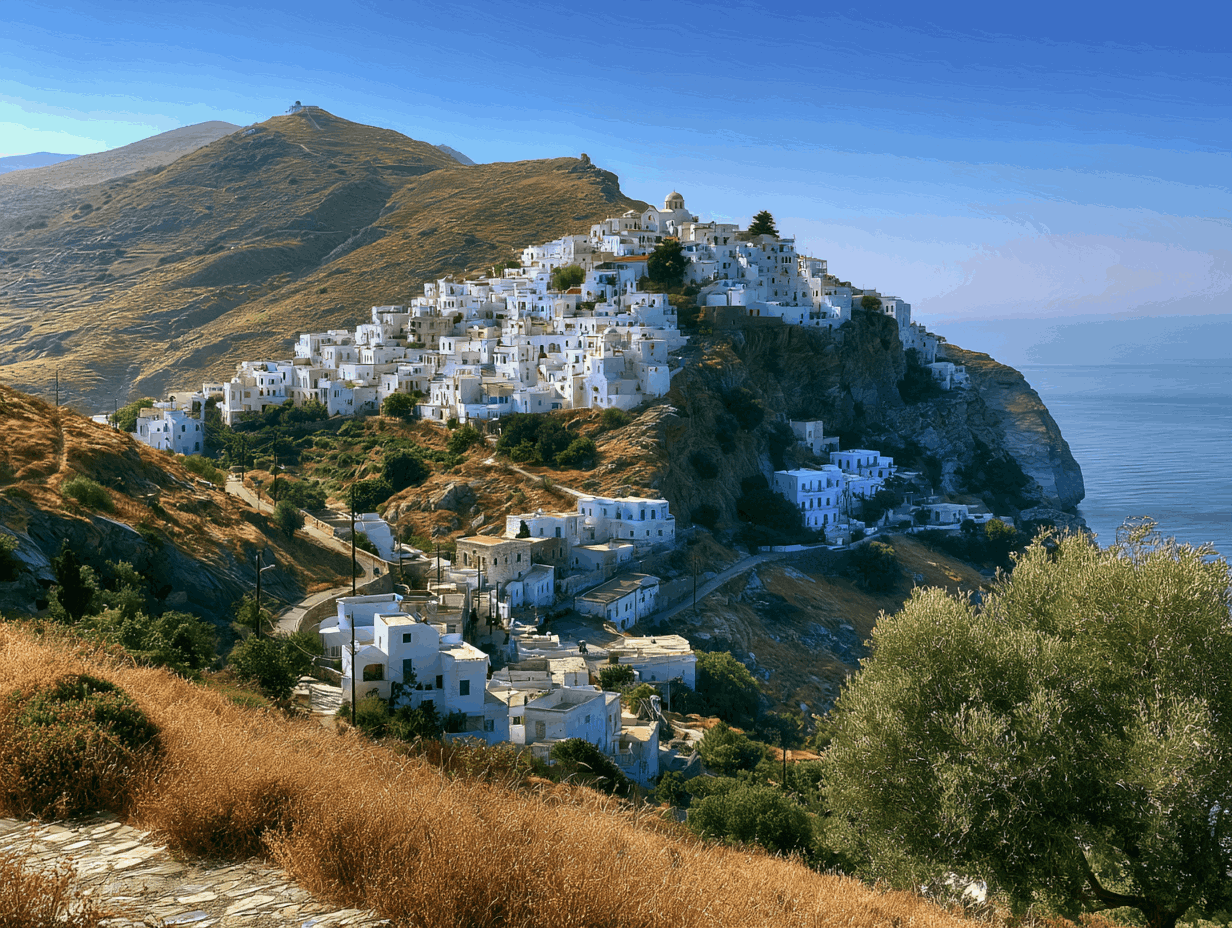
Unravel the quieter edges of Greece and the familiar islands fall away. Most routes head for the larger names, yet the Aegean and Ionian still hold smaller islands, inland settlements and coastal paths that see far fewer visitors. This piece stays with those less marked places, the villages that keep their own pace, the mountain corners and the shores that remain mostly local.
Places
In the Aegean the smaller islands often sit just beyond the main ferry lines. Places like those in the Lesser Cyclades or the quieter corners of the Dodecanese keep low white houses and harbours that empty once the day boats leave. Streets stay narrow, the main square doubles as a meeting point, and the shops close when the owner decides rather than by fixed hours. On the Ionian side some of the smaller islands and the less developed stretches of the larger ones hold villages that face the sea yet feel turned inward. Inland mountain settlements add another layer. In the Peloponnese or on Crete the higher villages cling to slopes with stone houses and paths that switchback between olive groves and open rock. These places rarely appear on standard lists. Their churches stand simple, the kafeneio still serves as the daily hub, and the traffic is more about local pickups than rented cars. Coastal paths link many of them. Some follow old mule tracks above the water, others cut through abandoned terraces where the walls have begun to crumble.
Landscapes
The islands themselves offer a tight mix of rock, scrub and sea. Cliffs drop straight into clear water on many of the quieter shores, and the light stays sharp even when the wind rises. Inland the mountains rise quickly. On larger islands or the mainland the higher ground opens into plateaus and valleys where the air cools and the vegetation shifts. Coastal paths often stay narrow and uneven, running between thyme and low bushes with the water always in view. Some lead to small coves that remain empty for much of the day, others climb to chapels that sit alone on the skyline. The scale stays human. Distances that look short on a map can take longer once the path turns rocky or the heat settles in. In spring the same slopes can hold wildflowers that disappear by midsummer, and the sea colour shifts with the depth and the light.
Cultures
Daily life in these corners still follows older rhythms. Markets appear once or twice a week and fill with produce from the surrounding plots, often sold by the same families who grow it. Food stays close to what the land and water provide. Fresh fish when the boats come in, olives, cheese and bread form the base of most meals, and the cooking stays simple. Local customs around greeting remain warm but unhurried. A coffee can stretch into conversation without much planning, and invitations to sit often arrive without formality. Festivals in these villages tend to stay small and tied to the church calendar or the harvest rather than wider events. What often surprises visitors is how ordinary the setting becomes for people who live with it. Children still walk the same paths to school, and the same stone walls that draw quiet attention serve as everyday boundaries for animals and gardens.
These islands and villages do not try to compete with the better known names. They simply continue on their own terms. The settlements give a human scale, the paths and shores open space and quiet, and the local habits keep the days moving in familiar cycles. Spending time among them usually leaves a clearer sense of the wider country that sits beyond the main ferry routes.
Leave your email if you would like occasional notes about new stories and quiet destinations.
No frequent messages, just the ones worth reading.
© 2026 Unravel PLC LLC. All rights reserved.
