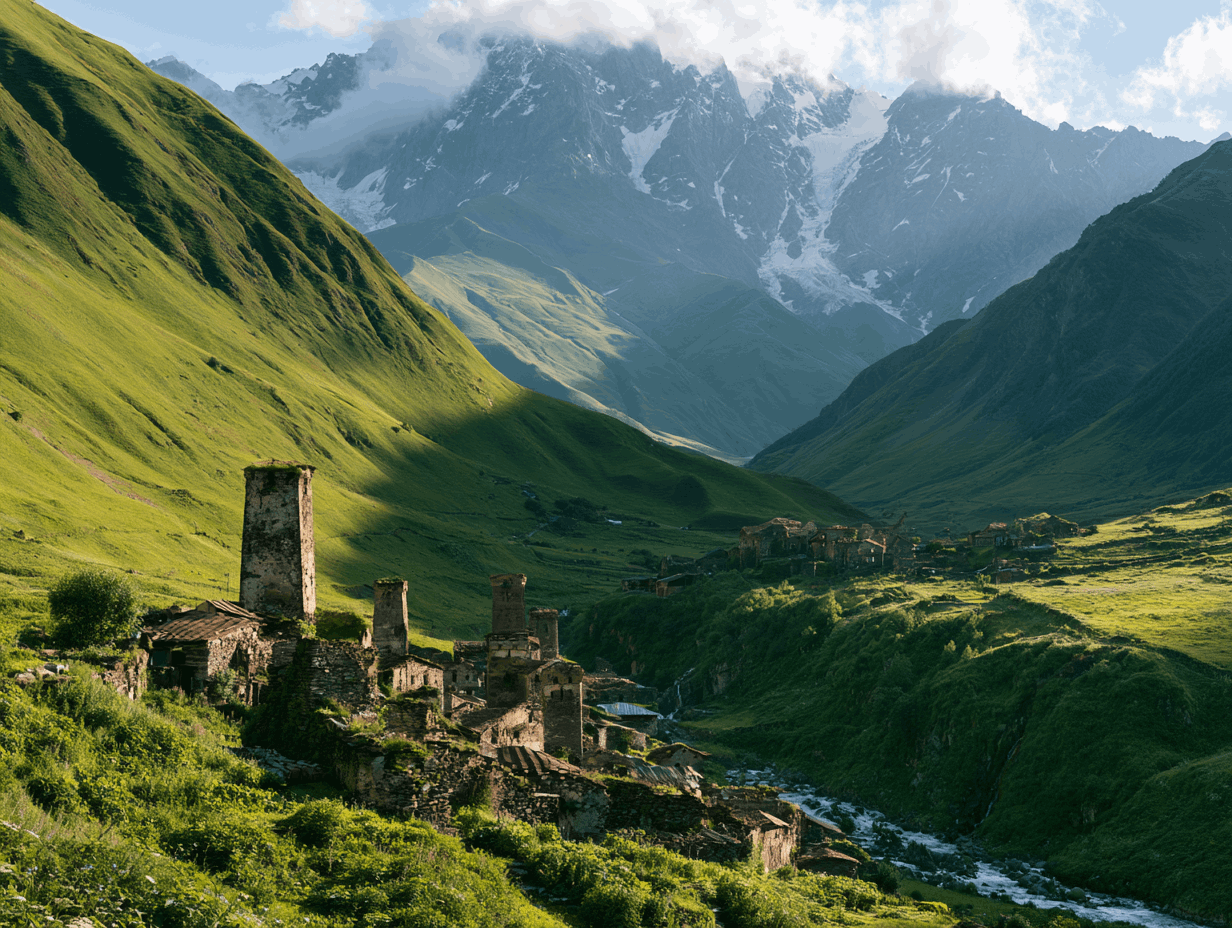
Unravel the higher ground of Georgia and the main roads fall behind fairly quickly. Most visitors stay with the better known valleys, yet the Caucasus still holds quieter folds, stone villages and trails that see far fewer feet. This piece stays with those less marked places, the settlements that keep older patterns, the remote valleys and the high routes that open only when the snow allows.
Places
In the northern ranges the better known gorges draw the traffic, but side valleys branch off with little signage and fewer vehicles. Villages in these folds often sit on terraces above the river, their stone towers and houses built tight against the slope. Some communities in Tusheti or the higher parts of Svaneti remain reachable only by rough tracks that close for months each year. The houses use local stone and wood, the churches stand simple, and the main paths between them still serve as daily routes for people and animals. Further east the valleys around the southern slopes hold quieter settlements where the architecture shifts and the language carries different notes. These places rarely appear on standard lists. Their squares stay small, the shops stock what the surrounding land and a few deliveries provide, and the pace follows the light and the weather more than any fixed schedule. High-altitude routes connect many of them. Some follow old shepherd paths, others climb toward passes that stay open only in the short summer window.
Landscapes
The valleys themselves carry much of the character. Remote stretches open into steep sides and wide floors where the river runs cold and the slopes hold a mix of forest and open grass. Higher up the ground turns to alpine meadows and rocky ridges that stay snow-patched well into the warmer months. Trails in these areas often start gentle then rise sharply, crossing streams that can swell after rain and ridges where the wind becomes constant. The scale shifts fast. One moment the path moves through cultivated plots, the next it enters empty high ground where the only sounds are water and wind. Some routes lead to small lakes that sit in glacial hollows, others simply crest a pass and drop into the next valley with little warning. The light changes quickly here, and the weather can close in without much notice once you leave the lower slopes.
Cultures
Daily life in these corners still follows patterns shaped by the terrain. Markets appear on set days in the larger villages and fill with cheese, meat and produce carried in from the surrounding pastures. Food stays close to what the land supports. Bread baked in traditional ovens, dairy from animals that graze the high meadows, and simple stews form the base of most meals. Local customs around hospitality remain strong. A visitor who arrives on foot or by shared transport often finds a place to sit and something to drink without much formality, and the exchange can stretch longer than expected. Festivals in these villages tend to stay small and tied to the agricultural or religious calendar rather than wider events. What frequently surprises outsiders is how ordinary the dramatic setting becomes for people who live with it. Children still walk the same steep paths to school, and the same stone towers that draw quiet attention serve as everyday markers of family and land.
These valleys and trails do not compete with the more visited routes. They simply continue on their own terms. The villages give a human scale, the high ground opens space and distance, and the local habits keep the days moving in familiar cycles. Spending time among them usually leaves a clearer sense of the wider country that sits beyond the main road.
Leave your email if you would like occasional notes about new stories and quiet destinations.
No frequent messages, just the ones worth reading.
© 2026 Unravel PLC LLC. All rights reserved.
